Eigenlayer is Revolutionizing Blockchain Security Through Restaking Innovation
Eigenlayer is fundamentally transforming how blockchain networks approach security and trust. As one of the most groundbreaking protocols in the Ethereum ecosystem, Eigenlayer introduces a novel concept called restaking that allows validators to extend their staked ETH security to multiple applications simultaneously. This innovative approach has captured the attention of developers, investors, and blockchain enthusiasts worldwide who recognize the immense potential of shared security infrastructure.
Understanding the Core Concept Behind Eigenlayer
Eigenlayer is a middleware protocol built on Ethereum that enables the rehypothecation of staked ETH. In simpler terms, Eigenlayer allows users who have already staked their Ethereum to opt into additional validation services without needing to unstake their assets. This creates a powerful economic security layer that can be leveraged by various decentralized applications, oracle networks, bridges, and other blockchain services that require robust security guarantees.
The fundamental premise of Eigenlayer is elegant yet powerful. Instead of requiring each new protocol to bootstrap its own validator set from scratch, Eigenlayer provides a shared security marketplace where existing Ethereum stakers can offer their economic commitment to secure additional services. This dramatically reduces the barrier to entry for new protocols while simultaneously creating additional yield opportunities for stakers.
The Problem Eigenlayer Solves
Before Eigenlayer emerged, every new decentralized service that required economic security had to establish its own trust network. This meant recruiting validators, distributing native tokens, and building security from the ground up. This fragmented approach led to several significant challenges that Eigenlayer directly addresses.
First, the capital inefficiency was substantial. Validators had to lock up capital in multiple different protocols, leading to fragmented liquidity across the ecosystem. Eigenlayer eliminates this inefficiency by allowing the same staked capital to secure multiple services simultaneously. Second, new protocols faced enormous difficulty in achieving sufficient security levels, as they competed for a limited pool of validators and capital. Eigenlayer solves this by providing immediate access to Ethereum's massive security budget.
How Eigenlayer Works: Technical Architecture
Eigenlayer operates through a sophisticated system of smart contracts deployed on Ethereum. The protocol consists of several key components that work together to enable restaking functionality. Understanding these components is essential for anyone looking to participate in the Eigenlayer ecosystem.
Restaking Mechanisms in Eigenlayer
Eigenlayer supports multiple methods of restaking to accommodate different types of participants. Native restaking allows Ethereum validators to point their withdrawal credentials to Eigenlayer smart contracts, enabling their staked ETH to secure additional services. This method is particularly attractive for solo stakers and professional node operators who want to maximize their capital efficiency.
Liquid staking token restaking is another approach supported by Eigenlayer. Users who hold liquid staking derivatives like stETH, rETH, or cbETH can deposit these tokens into Eigenlayer to participate in restaking. This opens up the Eigenlayer ecosystem to a broader audience who may not run their own validators but still want to contribute to and benefit from shared security.
Actively Validated Services on Eigenlayer
Actively Validated Services, commonly known as AVS, represent the protocols and applications that leverage Eigenlayer for their security needs. These services can range from data availability layers and decentralized sequencers to oracle networks and cross-chain bridges. Eigenlayer provides the infrastructure for these services to tap into Ethereum's security without building their own validator networks.
Each AVS on Eigenlayer defines its own validation requirements and reward structures. Operators who choose to validate for specific AVS must meet these requirements and agree to the associated slashing conditions. This creates a flexible marketplace where different services can customize their security parameters while still benefiting from the shared security pool that Eigenlayer provides.
The Economic Model of Eigenlayer
Eigenlayer introduces compelling economic incentives that align the interests of all participants in the ecosystem. The protocol creates value for stakers, operators, and AVS developers through a carefully designed incentive structure that promotes security and participation.
Rewards and Yield Generation
Participants in Eigenlayer can earn additional yields on top of their base Ethereum staking rewards. By opting into various AVS, restakers receive compensation from these services in exchange for providing security guarantees. This creates a powerful value proposition for stakers looking to maximize their returns without acquiring additional capital.
The yield opportunities within Eigenlayer are diverse and depend on which AVS a restaker chooses to support. Some services may offer higher rewards but come with increased slashing risks, while others provide more modest returns with lower risk profiles. Eigenlayer enables this market-based approach to security pricing, allowing supply and demand to determine appropriate compensation levels.
Slashing and Risk Management
Eigenlayer implements slashing mechanisms to ensure that restakers remain honest and perform their validation duties correctly. If an operator behaves maliciously or fails to meet their obligations to an AVS, their restaked assets can be slashed according to the conditions specified by that service.
Risk management is crucial when participating in Eigenlayer. Restakers must carefully evaluate the AVS they choose to support, considering factors like the development team's reputation, the technical complexity of the validation tasks, and the slashing conditions. Eigenlayer provides transparency into these parameters, enabling informed decision-making by participants.
The Eigenlayer Ecosystem and Key Players
The Eigenlayer ecosystem has grown rapidly since its inception, attracting numerous projects and participants who recognize the transformative potential of restaking. Understanding the key players in this ecosystem provides insight into the protocol's trajectory and impact.
Notable AVS Building on Eigenlayer
Several prominent projects have chosen to build on Eigenlayer, leveraging its shared security model to enhance their offerings. EigenDA is one of the most significant AVS, providing a highly scalable data availability solution that benefits from Eigenlayer's security guarantees. This service is particularly relevant for rollups seeking cost-effective data availability without compromising on security.
Other AVS in the Eigenlayer ecosystem include decentralized sequencing services, keeper networks, and various infrastructure protocols. Each of these services benefits from Eigenlayer's ability to provide immediate access to substantial economic security, accelerating their development and adoption timelines.
Operators in the Eigenlayer Network
Operators play a critical role in the Eigenlayer ecosystem by running the actual validation infrastructure for AVS. These entities range from professional staking services to individual node operators who possess the technical expertise to run reliable validation operations. Eigenlayer creates opportunities for these operators to expand their service offerings and revenue streams.
The relationship between operators and delegators in Eigenlayer mirrors traditional staking dynamics but with added complexity. Delegators who lack the technical capability to run validation infrastructure can delegate their restaked assets to operators, sharing in the rewards while relying on the operator's expertise and infrastructure.
Eigenlayer and the Future of Blockchain Security
Eigenlayer represents a paradigm shift in how we think about blockchain security and trust. By creating a shared security layer, Eigenlayer enables more efficient capital allocation across the ecosystem while lowering barriers for new protocols to achieve robust security guarantees.
Impact on Ethereum's Security Model
Eigenlayer extends Ethereum's security model in significant ways. Rather than Ethereum's staked ETH only securing the base layer, Eigenlayer allows this security to be exported to countless additional services. This amplifies the utility of staked ETH and strengthens the overall value proposition of the Ethereum ecosystem.
Critics have raised concerns about the potential systemic risks that Eigenlayer introduces through restaking. If a large amount of restaked ETH were slashed simultaneously due to a widespread AVS failure, it could have cascading effects on the broader ecosystem. Eigenlayer addresses these concerns through careful risk management and slashing design, but ongoing vigilance is necessary as the ecosystem grows.
The Road Ahead for Eigenlayer
Eigenlayer continues to evolve with new features, AVS integrations, and ecosystem developments. The protocol's roadmap includes enhancements to operator management, improved delegation mechanisms, and expanded AVS capabilities. As Eigenlayer matures, it is positioned to become fundamental infrastructure for the next generation of decentralized applications.
The broader implications of Eigenlayer extend beyond immediate technical benefits. By demonstrating the viability of shared security models, Eigenlayer is inspiring new approaches to blockchain architecture and economics. Other ecosystems are taking note, and similar concepts are being explored across multiple blockchain platforms.
Getting Started with Eigenlayer
For those interested in participating in the Eigenlayer ecosystem, several pathways exist depending on your resources and technical capabilities. Whether you are a large institutional staker or an individual with liquid staking tokens, Eigenlayer offers opportunities to contribute to and benefit from shared security.
Restaking Your Assets on Eigenlayer
The process of restaking on Eigenlayer involves depositing eligible assets into the protocol's smart contracts. For liquid staking token holders, this is a relatively straightforward process that can be completed through the Eigenlayer application interface. Native restakers face additional complexity in configuring their validator withdrawal credentials but gain direct access to restaking rewards.
Before restaking on Eigenlayer, participants should thoroughly research the associated risks and rewards. Understanding the slashing conditions of different AVS, evaluating operator reliability, and diversifying across multiple services can help manage risk while maximizing potential returns from Eigenlayer participation.
Building on Eigenlayer as a Developer
Developers looking to leverage Eigenlayer for their applications have access to comprehensive documentation and developer resources. The Eigenlayer team has created tools and frameworks that simplify the process of designing and deploying AVS, enabling developers to focus on their core value proposition rather than security bootstrapping.
The Eigenlayer developer community is active and supportive, providing guidance to newcomers and collaborating on ecosystem development. This community-driven approach has been instrumental in Eigenlayer's rapid growth and will continue to drive innovation within the ecosystem.
Conclusion: Eigenlayer's Transformative Potential
Eigenlayer stands at the forefront of blockchain innovation, introducing concepts that fundamentally reshape how decentralized systems approach security and trust. Through restaking, Eigenlayer creates unprecedented capital efficiency while enabling new protocols to achieve robust security from day one. As the ecosystem continues to mature and expand, Eigenlayer is poised to become essential infrastructure for the decentralized future.
The success of Eigenlayer will ultimately depend on the continued growth of valuable AVS, the reliable performance of operators, and the sustained participation of restakers. With strong fundamentals and a compelling value proposition, Eigenlayer has established itself as a protocol worth watching closely as the blockchain industry evolves. The innovations pioneered by Eigenlayer today will likely influence blockchain architecture for years to come, making it one of the most significant developments in the Ethereum ecosystem.
Search on Youtube!
Eigenlayer is Revolutionizing Ethereum Security Through Restaking Innovation
Eigenlayer is fundamentally transforming how blockchain security operates by introducing a groundbreaking concept known as restaking. This innovative protocol has captured the attention of the entire cryptocurrency ecosystem, attracting billions of dollars in staked assets and establishing itself as one of the most significant developments in decentralized finance. Understanding what Eigenlayer is and how it functions is essential for anyone seeking to comprehend the future direction of blockchain technology and cryptoeconomic security models.
Understanding the Core Concept Behind Eigenlayer
Eigenlayer is a protocol built on Ethereum that enables users to restake their already-staked ETH to secure additional services and networks. This revolutionary approach allows stakers to extend the security guarantees of Ethereum to other protocols without requiring those protocols to bootstrap their own validator sets from scratch. The fundamental innovation that Eigenlayer is bringing to the table represents a paradigm shift in how we think about blockchain security and capital efficiency.
At its core, Eigenlayer is designed to solve a critical problem in the blockchain ecosystem. When new protocols launch, they traditionally need to attract their own set of validators and establish economic security independently. This process is expensive, time-consuming, and often results in fragmented security across the ecosystem. Eigenlayer is addressing this challenge by creating a shared security model where Ethereum validators can opt into securing multiple services simultaneously.
The Mechanics of Restaking on Eigenlayer
Eigenlayer is built around the concept of restaking, which allows Ethereum stakers to commit their staked ETH as collateral for additional protocols. When users participate in Eigenlayer, they are essentially agreeing to extend their staking commitments beyond just validating Ethereum transactions. This means their staked assets can be slashed not only for Ethereum protocol violations but also for misbehavior on the additional services they choose to secure.
The restaking mechanism that Eigenlayer is implementing works through smart contracts that manage the relationship between stakers and what are called Actively Validated Services. These services can range from oracle networks to data availability layers, bridges, and various other infrastructure components that require economic security. Eigenlayer is creating an open marketplace where these services can access Ethereum's robust security guarantees.
Actively Validated Services and the Eigenlayer Ecosystem
Eigenlayer is enabling a new category of blockchain infrastructure called Actively Validated Services. These AVSs represent any system that requires distributed validation and can benefit from cryptoeconomic security. The diversity of potential AVSs that Eigenlayer is supporting demonstrates the protocol's versatility and its potential to become foundational infrastructure for the entire blockchain ecosystem.
The AVS model that Eigenlayer is pioneering allows developers to launch new services without the traditional bootstrapping problem. Instead of spending months or years building up their own validator network, projects can leverage the existing security of Ethereum through Eigenlayer. This dramatically reduces the barriers to entry for new protocols and enables faster innovation across the ecosystem.
Current State of AVS Development
Eigenlayer is currently in a phase of rapid development with numerous AVSs either live or in development. These services span multiple categories including data availability solutions, oracle networks, keeper networks, and interoperability protocols. The ecosystem that Eigenlayer is building represents a significant expansion of what's possible on Ethereum and demonstrates the protocol's potential to reshape blockchain infrastructure.
However, as community discussions have highlighted, many AVSs on Eigenlayer have not yet found ways to generate substantial real value. Some restaking yields through Eigenlayer remain relatively modest, with certain services offering APYs that barely cover gas costs. This reality check is important for understanding where Eigenlayer is in its development journey and the challenges that remain ahead.
The Economics of Eigenlayer Restaking
Eigenlayer is creating a new economic model for blockchain security that has profound implications for stakers and protocols alike. The yield opportunities that Eigenlayer is presenting come with both potential rewards and additional risks that participants must carefully consider. Understanding these economics is crucial for anyone looking to participate in the Eigenlayer ecosystem.
The current yield landscape on Eigenlayer has been a topic of significant discussion within the community. While Eigenlayer has attracted billions in restaked ETH, the actual returns have sometimes fallen short of expectations. Average restaking APRs on Eigenlayer have hovered at relatively low levels, with much of the initial attraction driven by speculative incentives and anticipated token rewards rather than sustainable economic activity from AVSs.
Sustainability Questions and Future Outlook
Eigenlayer is facing important questions about the long-term sustainability of its yield model. Critics have pointed out that without robust cryptoeconomic incentives from AVSs generating real value, the restaking ecosystem risks becoming more about short-term yield chasing than providing genuine security benefits. Eigenlayer is working to address these concerns by developing more sophisticated economic models and attracting AVSs with clear value propositions.
The future success of Eigenlayer depends significantly on whether AVSs can develop sustainable business models that generate sufficient revenue to pay meaningful yields to restakers. As Eigenlayer is still in relatively early stages, there is considerable optimism that as the ecosystem matures, these economic fundamentals will strengthen.
The EIGEN Token and Governance
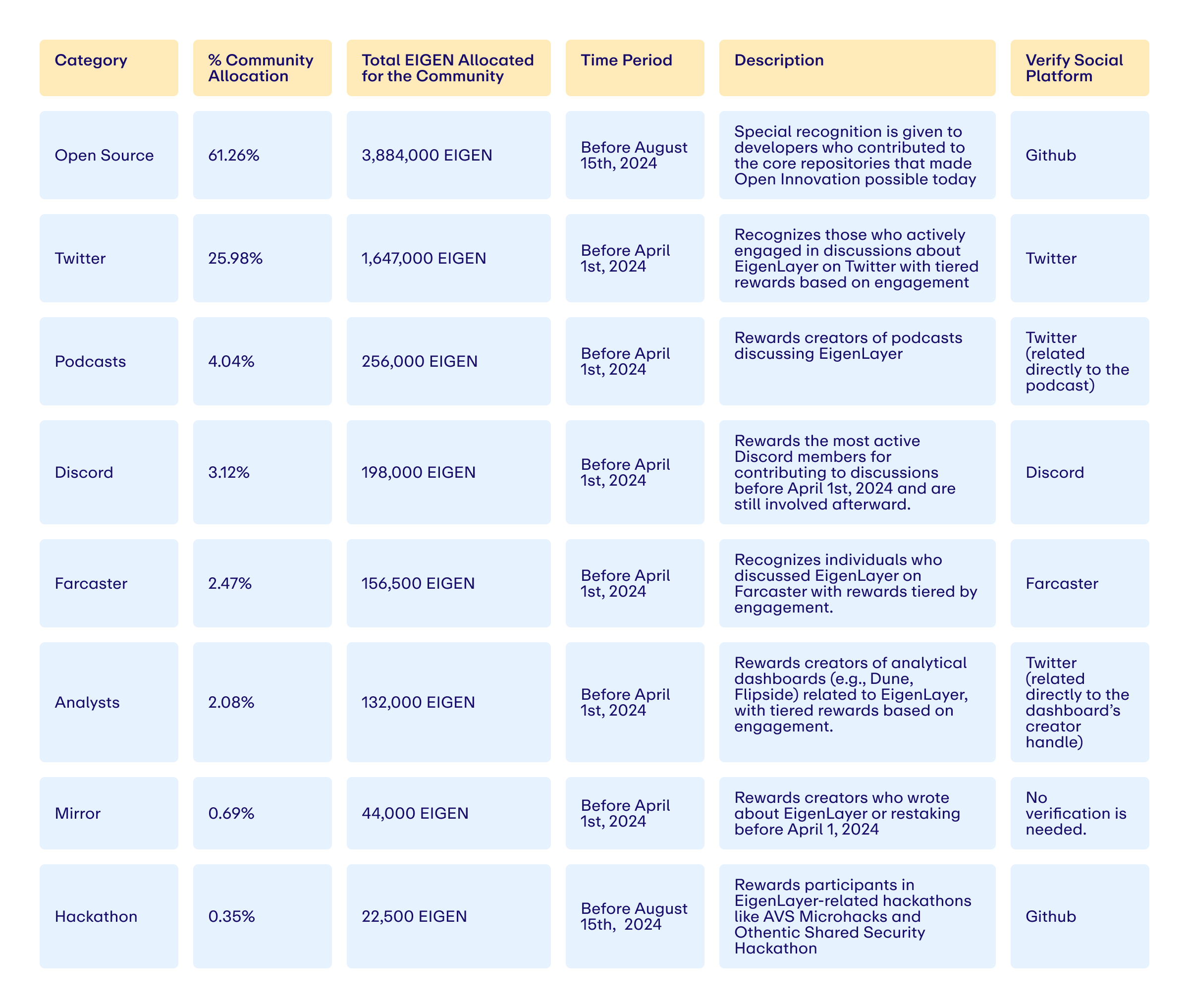
Eigenlayer is governed through its native EIGEN token, which plays a crucial role in the protocol's security and governance mechanisms. The token distribution and airdrop associated with Eigenlayer generated significant attention and discussion within the cryptocurrency community, highlighting both the enthusiasm for the project and some of the challenges inherent in token distribution models.
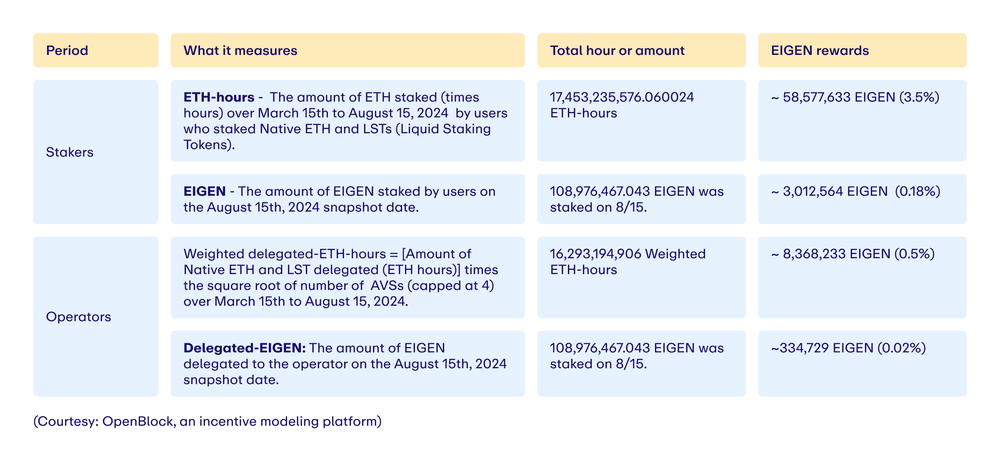
The initial airdrop that Eigenlayer conducted allocated approximately five percent of the total supply designated for community distribution. This represented the first phase of a larger distribution plan that Eigenlayer is implementing over time. The snapshot for this initial distribution was taken in mid-March, with additional distributions planned for users who maintained longer staking commitments.
Airdrop Distribution and Community Response
The airdrop mechanics that Eigenlayer employed generated mixed reactions from the community. The linear distribution model meant that larger stakers received proportionally more tokens, leading to criticism that Eigenlayer had favored whales over smaller participants. Many users reported receiving relatively modest allocations, with some getting minimum amounts that translated to approximately one hundred dollars at pre-market prices.
Additionally, Eigenlayer implemented geographic restrictions that excluded users from nearly fifty countries from participating in the token claim. This extensive exclusion list, combined with restrictions on VPN usage and initial transfer limitations, sparked debate about the accessibility and fairness of the Eigenlayer distribution model. These decisions reflect the complex regulatory landscape that Eigenlayer is navigating as it expands its ecosystem.
Competition in the Restaking Space
Eigenlayer is not alone in the restaking market, with competitors emerging to challenge its dominant position. One notable competitor, Symbiotic, recently raised twenty-nine million dollars in Series A funding led by Pantera Capital with participation from Coinbase Ventures. This competitive pressure is pushing Eigenlayer to continue innovating and improving its offerings.
Symbiotic positions itself as offering Universal Staking, a modular framework that aims to go beyond traditional restaking. While Eigenlayer is focused primarily on Ethereum restaking, competitors are exploring broader approaches to cryptoeconomic coordination. This competition is healthy for the ecosystem and is driving Eigenlayer to refine its value proposition and expand its capabilities.
Differentiation and Market Position
Despite emerging competition, Eigenlayer maintains significant advantages including first-mover status, substantial total value locked, and an established ecosystem of AVSs and integrations. Eigenlayer is continuing to build out its technology stack and expand its network of partnerships to maintain its market leadership position.
The competitive dynamics in restaking are pushing Eigenlayer to focus on areas like improved tooling, better user experience, and more attractive economics for both stakers and AVSs. This competition ultimately benefits the broader ecosystem by driving innovation and giving users more choices for how they want to participate in restaking.
Technical Architecture of Eigenlayer
Eigenlayer is built on sophisticated smart contract architecture that manages the complex relationships between stakers, operators, and AVSs. The technical design that Eigenlayer is implementing enables flexible delegation, customizable slashing conditions, and efficient capital utilization across multiple services simultaneously.
The protocol architecture that Eigenlayer is using separates the roles of stakers and operators, allowing for specialization and efficiency. Stakers provide the economic security through their restaked assets, while operators run the actual validation infrastructure for AVSs. This separation that Eigenlayer is implementing allows each party to focus on their core competency.
Security Considerations and Risk Management
Eigenlayer is introducing new risk vectors that participants must understand and manage. By restaking assets to secure multiple services, users are exposing themselves to potential slashing from multiple sources. Eigenlayer is developing risk management tools and frameworks to help users understand and mitigate these risks, but the fundamental tradeoff between higher yields and increased risk remains.
The slashing mechanisms that Eigenlayer is implementing are designed to be fair and proportionate, but the complexity of managing risk across multiple AVSs presents challenges. Users considering participation in Eigenlayer should carefully evaluate the specific risks associated with each AVS they choose to secure and diversify their exposure appropriately.
The Future Roadmap for Eigenlayer
Eigenlayer is continuing to develop its protocol with ambitious plans for future enhancements. The roadmap includes improvements to the AVS marketplace, enhanced tooling for developers, and expanded capabilities for stakers and operators. Eigenlayer is also working on cross-chain expansion and interoperability features that could extend its reach beyond Ethereum.
The long-term vision that Eigenlayer is pursuing involves becoming foundational infrastructure for the entire blockchain ecosystem. By providing a universal layer for cryptoeconomic security, Eigenlayer aims to enable new categories of applications and services that were previously impractical due to security bootstrapping challenges.
Ecosystem Growth and Adoption
Eigenlayer is experiencing rapid ecosystem growth with new AVSs, integrations, and partnerships being announced regularly. The protocol has established itself as a key piece of Ethereum infrastructure, and Eigenlayer is working to expand its influence and utility across the broader cryptocurrency ecosystem.
The success metrics for Eigenlayer extend beyond just total value locked to include the diversity and quality of AVSs, the sustainability of yields, and the overall security benefits provided to the ecosystem. Eigenlayer is focused on building long-term value rather than optimizing for short-term metrics, which should position the protocol well for continued growth and adoption.
Conclusion: The Significance of Eigenlayer
Eigenlayer is representing one of the most significant innovations in blockchain technology since the introduction of proof-of-stake consensus. By enabling restaking and creating a marketplace for shared security, Eigenlayer is fundamentally changing how new protocols can launch and operate. The implications of what Eigenlayer is building extend far beyond simple yield generation to encompass the entire future of decentralized infrastructure.
While challenges remain including yield sustainability, competition, and regulatory considerations, Eigenlayer is well-positioned to continue its leadership in the restaking space. For participants in the cryptocurrency ecosystem, understanding Eigenlayer is essential for comprehending the evolving landscape of blockchain security and the opportunities it presents. As Eigenlayer continues to mature and its ecosystem expands, its impact on the broader cryptocurrency industry will only grow more significant.
Search on Youtube!